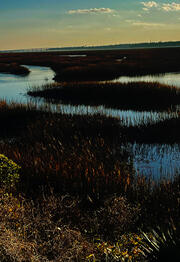
DIS YA LAND
weh we bin come from
Dis Ya Land
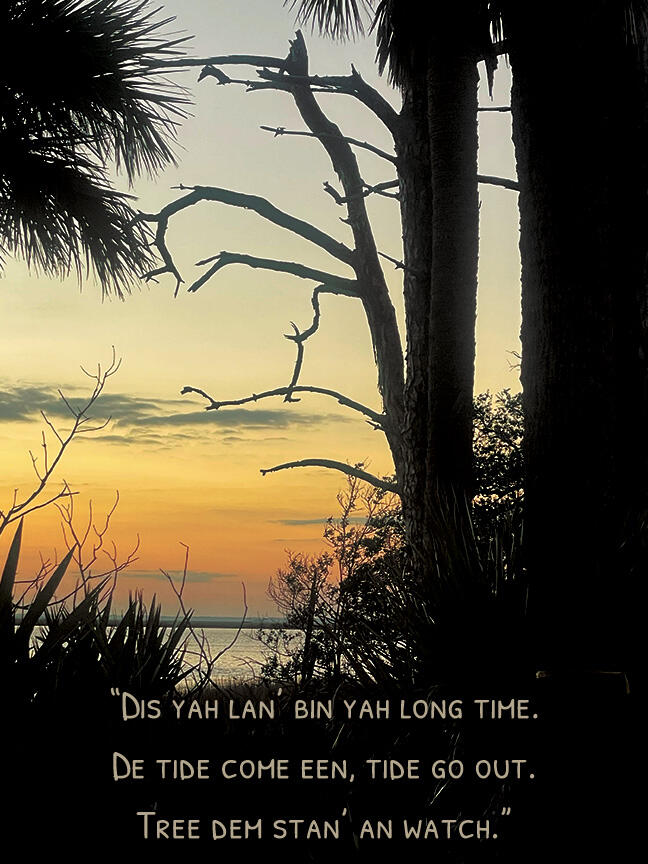
“Dis yah lan’ bin yah long time. De tide come een, tide go out. Tree dem stan’ an watch.”


Nature Ain Lie
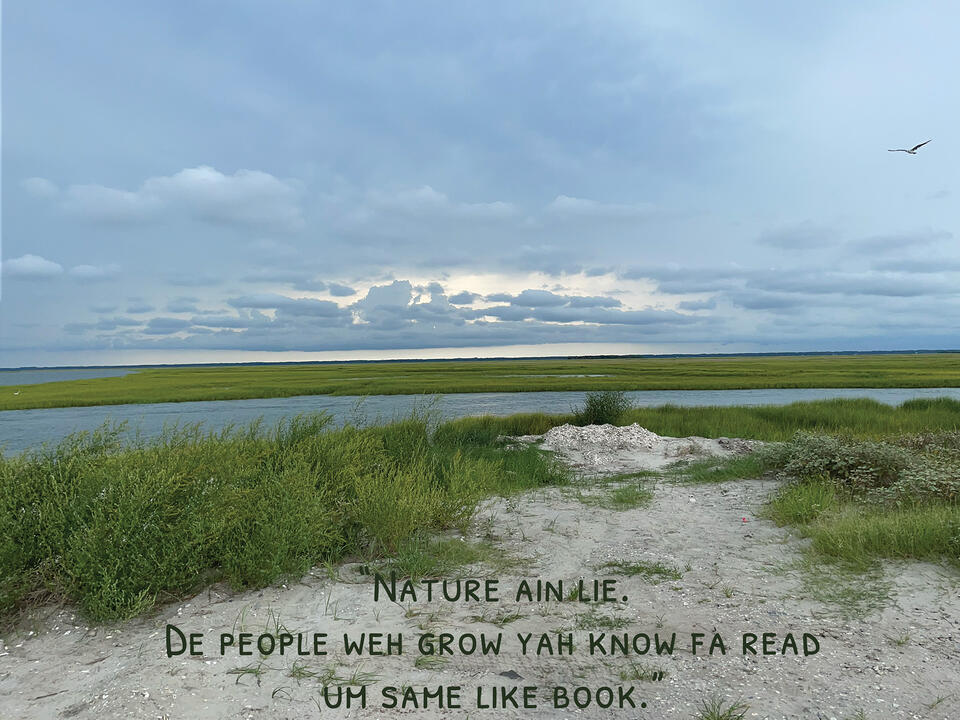
“Nature ain lie. De people weh grow yah know fa read um same like book.”
Sun gwine down
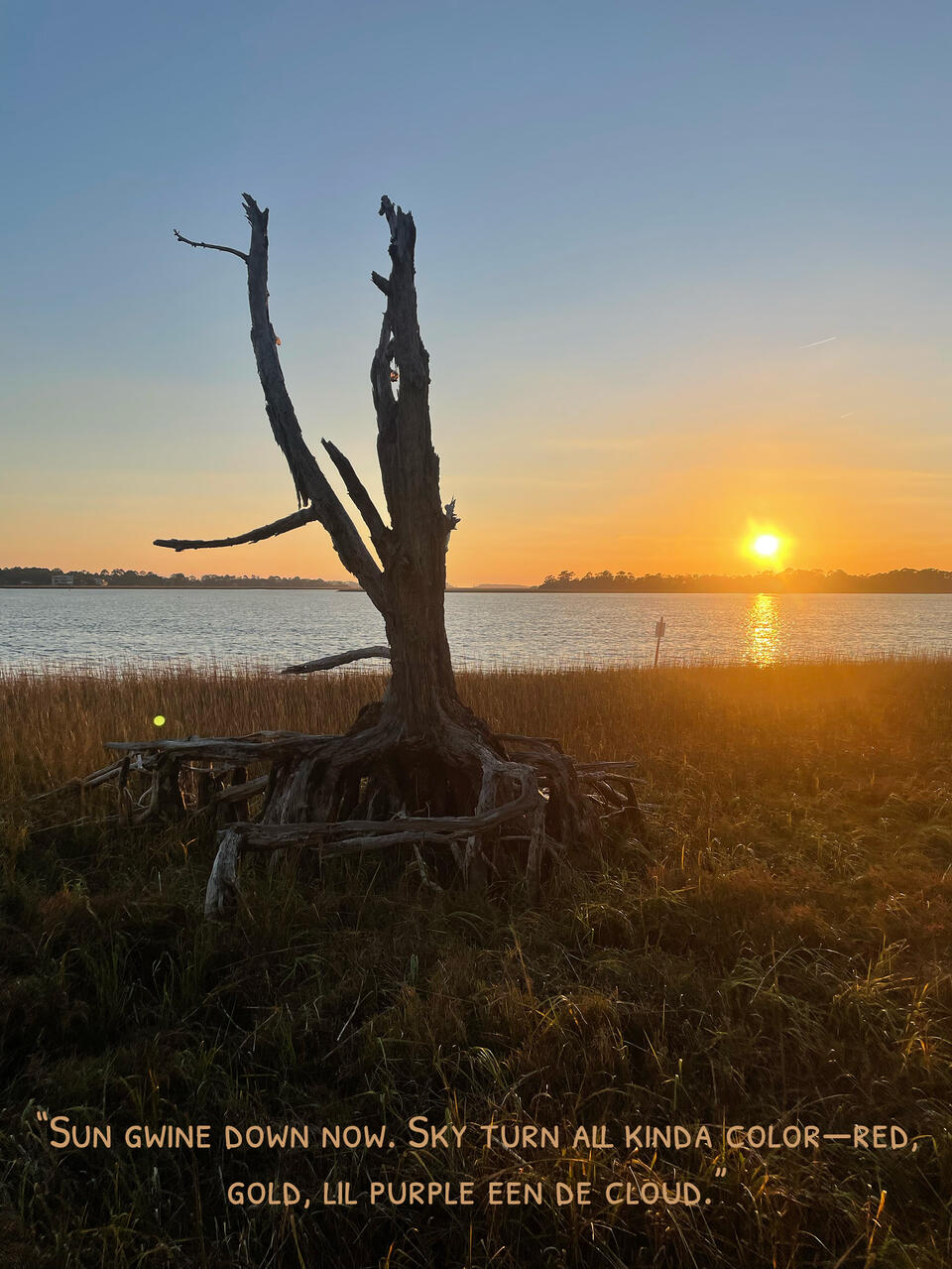
“Sun gwine down now. Sky turn all kinda color—red, gold, lil purple een de cloud.”

Dis Ya Land
The ProcessMy time at Lands End Beach stayed with me long after I left. I wasn’t just visiting—I was observing, studying, slowing down enough to really see. The way the trees leaned into the wind, the textures of driftwood, the quiet tension between growth and erosion—it all started to shape how I was thinking about the work. Tree Watchin came out of that space of attention.I collected what the shoreline offered—foam, paper, twigs, branches, seaweed, algae—but I didn’t rush into making anything. I lived with those materials for weeks. I let them sit with me, shift in meaning, dry out, change texture. I needed to understand what they were before deciding what they could become.I knew I wanted to stay rooted in lithography—printmaking is my language—but these materials weren’t made for that process. So I had to find a way to bring them into my world without losing their integrity. That meant experimenting, failing, trying again. I began breaking things down, testing how organic matter could translate onto paper. Eventually, I created a green dye using algae, seaweed, and fragments of paper—something pulled directly from the environment itself.I let my printmaking paper sit in that mixture, allowing it to absorb the color slowly, naturally. It wasn’t about control—it was about allowing the material to speak. Once the paper held that presence, I was able to begin working with pigment transfers, layering the image in a way that felt honest to both the process and the place it came from.Tree Watchin isn’t just about what I saw—it’s about how I learned to see differently. It’s about patience, about listening, about letting the land and its remnants guide the work instead of forcing it into something familiar.
Nature Ain Lie
The ConceptDis ya Land started as a conversation between me and the land. I didn’t approach this work from a distance—I walked the beach, spent time with the tides, listened to the wind, and paid attention to what the land was trying to say. The debris I collect isn’t wasn’t material; it’s evidence. It tells a story about what’s happening now, what was and what could be lost if we don’t change course.As I move through the sand, the mud, the water, I feel like I’m in conversation with my ancestors. I think about how deeply they understood this land—how survival depended on respect, balance, and awareness. That knowledge still lives here, but it requires listening. This work is my way of listening.By transforming what has been discarded into something meaningful, I’m not just making art—I’m honoring a tradition of care and responsibility. In Gullah/Geechee culture, the land and water are not separate from us; they are part of who we are. Through Dis ya Land, I’m speaking with those who came before me, and asking how we carry that respect forward, so what remains can still be recognized by those who come after.
Sun gwine down
The PossibilitiesAll the time spent walking the shoreline and sitting with what I gathered—has shown me that awareness of nature isn’t passive. It’s active. It asks something of us.When I slow down enough to observe—to really see the patterns in the water, the strain in the trees, the quiet accumulation of debris—I begin to understand that nature is constantly communicating. Not in abstraction, but in real, material ways. The damage is visible. The resilience is visible too. And somewhere in that tension, there are possibilities.Working with what I collected, living with it before shaping it, taught me that solutions don’t always come from forcing change—they come from paying attention. From allowing materials, histories, and environments to guide the process. That same approach can extend beyond the work. If we become more aware, more considerate, more in rhythm with the land and water, we might begin to imagine new ways of creating, sustaining, and repairing.In Gullah/Geechee culture, respect for nature has never been optional—it’s been foundational. It’s a way of living that recognizes interdependence, that understands the future is tied to how we move in the present. My conversations with the ancestors remind me that this knowledge isn’t lost—it’s waiting to be remembered, practiced, and carried forward.So the question becomes: if the land is still speaking, and the answers are still here, how do we choose to listen—and what are we willing to change once we do?